If you live in Liverpool and have been wondering whether solar makes sense for your home, you are in good company. This page walks through the realities of going solar in Liverpool. There is no jargon and no pressure, only the information you need to decide what feels right for you.
What solar looks like on a typical Liverpool roof
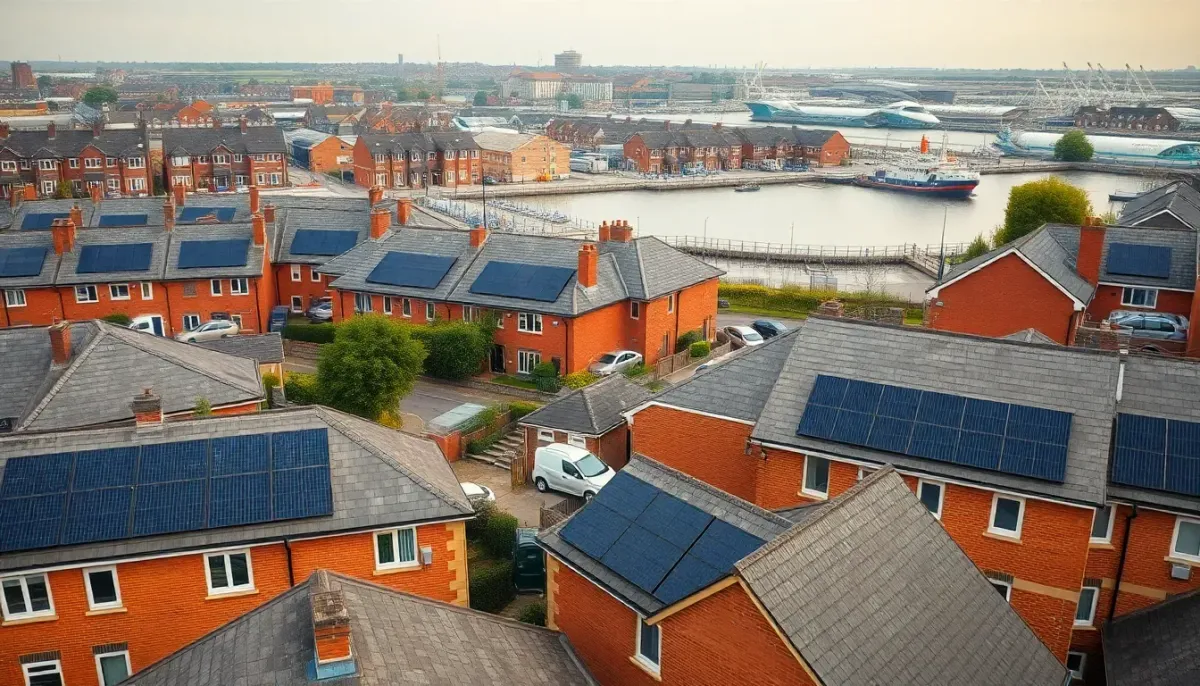
Liverpool's housing stock tells a story. It runs from the red-brick terraces of Toxteth and Anfield to the semi-detached streets of Wavertree, Woolton and Allerton. The city is full of roofs that were built long before solar panels existed, yet most of them are perfectly suitable.
A south-facing pitch is ideal. However, east- and west-facing roofs still generate plenty of useful power through the day.
Installers who know Liverpool roofs understand the quirks. For example, terraces have shared chimney stacks, and slate or concrete tile variations are common. Near the waterfront, conservation-area rules may also apply. A proper survey will spot any shading and factor it into the design.
Liverpool weather and solar output
It's a common myth that you need Mediterranean sunshine for solar to pay off. Liverpool, however, gets plenty of daylight hours through the year, and panels generate power from light, not heat. Cooler temperatures can even help panels work better. Long summer evenings mean your system keeps producing well into the evening.
Costs, payback and the 0% VAT window
Nationally, a 4kWp system on a three-bedroom home costs roughly £6,000–£8,000 fully installed. Adding battery storage usually brings the total to £10,000–£14,000. Those figures apply in Liverpool just as they do anywhere else.
Meanwhile, the 0% VAT rate on domestic solar and battery installations runs until 31 March 2027. This saves roughly £1,000–£3,000 on a typical installed price.
Most UK homes see their panels pay for themselves in roughly 10–15 years. This depends on how much daytime power you use and what export rate you secure. Panels usually carry a 25-year guarantee, yet they keep producing well beyond that, losing under 1% output a year.
Grants and the Smart Export Guarantee
The ECO4 scheme can fund 100% of a solar installation for households on certain means-tested benefits with a lower EPC rating (D–G). That is usually worth £5,000–£8,000. It comes via energy suppliers or Local Authority Flexibility routes. The scheme is due to run to the end of 2026.
The Smart Export Guarantee means licensed suppliers must pay you for surplus power you send to the grid. Rates vary widely, from roughly 1p to 15p per kWh on standard tariffs, with a market average around 13p/kWh. You'll need an MCS-certified installation to register for SEG.
What the installation process feels like
Once you've had a survey and agreed a design, the install usually takes one to two days. The installer commissions the system and talks you through the monitoring app. You also get the paperwork, including the MCS certificate you'll need for SEG registration.
Why Maya Solar works differently
Maya Solar isn't an installer. We're the friendly first step. We cover England, Scotland and Wales, including every Liverpool postcode.
We arrange a free, no-obligation survey and introduce you to MCS-certified installers who know Merseyside roofs. There are no phone calls to chase and no pressure.
Ready to see what solar could do for your Liverpool home?
If you'd like a clear, honest picture of what solar could look like on your home, fill in our short online form. We'll arrange a free survey with an MCS-certified installer who knows Liverpool roofs.